The Real Monster in The Odyssey Isn't the Cyclops [WRAP 220]
|
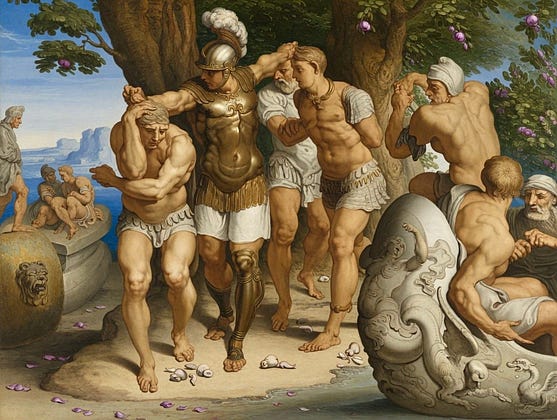
Hey Reader, have you watched The Odyssey yet? I'm waiting until I can get a decent seat on an IMAX 70MM screen, so it's going to be a couple more weeks for me. But everyone on the internet is talking about the film—the imagery, the story, the characters, and the challenges they face on the way home from a long war. Since I can't watch it yet, I've been doing the next best thing: reading on Kindle while my I wait for my little kids to fall asleep. Quick one before I get into it... a few of you have asked what I'm teaching inside Claude for Creators. Basically it's a whole system for letting AI handle the mechanical middle of your creator content while you keep the parts only you can do. Here's where to look if you're curious. Everybody remembers the Cyclops and the Sirens. Being drilled in the classics growing up will do that. But early in The Odyssey, there's a scene that gets skipped over, and for our modern society it might be the most important one in the whole book. I was taking notes on it earlier and wanted to share why I just can't stop thinking about this part of the story. 💡 One Big Idea: The Lesson of the Lotus EatersOdysseus and his crew make landfall after nine days at sea. He sends a scouting party ashore to find out who lives there. The locals, "the Lotus-eaters", don't attack or trick them—they don't even lay a hand on them. They just feed them the fruit of the lotus. And that's it. That's the whole threat. The men eat it, and it's so pleasurable they stop caring about anything else. Not home. Not their families. Not the ship waiting on the shore. Odysseus has to go drag them back by their hair and tie them to the oars—restrained, not from danger, but from pleasure.
I can't stop thinking about that story. See, the lotus never had to fight anyone. The Cyclops is trying to eat them. The Sirens are trying to wreck them. Both are obvious enough that they remind you life is worth protecting. But the lotus doesn't threaten your life—it just convinces you not to want the rest of it. Comfort is the only threat in the whole epic that requires zero effort on its part. It just waits. I think that's why we're so bad at defending against it. You can train for a storm. You can plan for a monster. Nobody trains for a Tuesday afternoon with nothing on the calendar and a phone within reach. It reminds me of The Comfort Crisis by Michael Easter, where he makes the same case with data instead of mythology. He writes that we're "living progressively sheltered, sterile, temperature-controlled, overfed, underchallenged, safety-netted lives"—and that it's costing us the very things that make life feel worth living. Not because comfort is evil, but because it never asks anything of you, and the things worth having always do. The men on that beach weren't weak. They just forgot, for a while, that they had somewhere to be. The oars were still right there. Someone just had to remind them. Most days, you're the one who has to do the reminding. Nobody's coming to grab your hand and put it back on the oar. That's basically what I was getting at last week with the Momentum Matrix: other people hand you their urgencies all day long, but nobody hands you a purpose. And even when someone does, it only works when you "pick up the oars" and row with them. 📹 One Video to Watch: This Notebook Will Help Your Read Like A ProHey by the way if you want to read more—especially classics like The Odyssey—then you'll want to check out this video from Park Notes. Very practical, interesting, and helpful advice along with a world-class mustache 👨🏻 📰 Article to Read: The Strangest Scene in the OdysseyThis is the piece that started the whole notebook page. The Culturist breaks down the Lotus-eaters scene better than I just did, and makes the case that pleasure is a bigger threat to a meaningful life than any monster—because monsters remind you you're alive, and comfort just lets you forget you were ever trying to get somewhere. Read it on Substack. If you want the longer, science-backed version of the same idea, The Comfort Crisis by Michael Easter is still one of the better books I've read on the subject—equal parts research and a guy hiking through Alaska trying to prove his own thesis. Thanks for reading the WRAP, talk soon! Matt |